It should come as no surprise that the New England whalefishery was a male-dominated space. Seafaring has traditionally been viewed in Western societies as a gendered occupation; this results in part from the physically strenuous, dangerous labors associated with maritime employment, but in 19th-century America, Victorian moral ideals reinforced a strict binary, gendered division of labor for New England men and women. Men were free to sail the high seas for years at a time in pursuit of income to support their families, while women were restricted to shoreside domestic society and expected to manage household affairs in the meantime. While this strictly gendered narrative of American maritime history is true to an extent, a closer look at the operation of maritime industries and communities reveals the extensive, essential roles that women played in the prosperity of the New England whalefishery. In rare cases, the myth of women’ s absence aboard whaleships can even be contested.
“She was apparelled like any barbaric Ethiopian emperor, his neck heavy with pendants of polished ivory. She was a thing of trophies. A cannibal of a craft, tricking herself forth in the chased bones of her enemies..a noble craft, but somehow a most melancholy! All noble things are touched with that.”
Herman Melville, Moby Dick, “The Ship”, pg. 78.
With a large percentage of the men in townships like Mystic and Stonington gone for 3, 4, even 5 years at a time, New England women assumed sole responsibility for the upkeep of their children, homes, and wider communities. It was often assumed that the bulk of the wages earned by whalers during their voyages were distributed to female dependents back on land during their absences; but more often than not, agents or shipowners had more control over the management of seamen’s wages. In her historical survey of 19th-century maritime cultures, Captain Ahab Had a Wife, Lisa Norling documents the erratic timing and inconsistencies within shipowners’ accounts as evidence that, in many cases, whalemen’s families rarely were able to access wages or credit during a voyage: “These sorts of advances could not have represented the families’ sole source of financial support…it seems clear that the industry discussion characterizing females as dependents mattered more to the men, those at sea and those on land, as a means of cementing their own relationships” (Norling 147).

To make up for this loss, many New England women would take on extra work to bring in more income – this included piecework, sewing shirts for sailors, purveying retail goods, and taking in boarders, an occupation that “ranged from the small-scale, informal, and occasional to large-scale commercial enterprises” (Norling 159). I was moved to read this detail during my research, as my own mother moved to Stonington with the goal of restoring our 17th-century home and turning it into a bed-and-breakfast. The homes and inns are (in my opinion) one of the most beautiful and unique assets of these communities, and I’d like to think of my mother’s passion project as just one piece of a much wider history of women fostering comfort, hospitality and kinship within the communities they inhabit.
The labors of New England women extended beyond the shoreline during whaling voyages as well. In addition to the preparation of clothing, bedding, and preserved food for their husbands to take to sea, New England wives also supplied a vital degree of emotional intimacy and comfort in the form of tokens or letters sent to men during their absences (Norling 154). Reinforcement of romantic attachment was essential to seamen on difficult voyages apart from their families for years at a time, and constituted an additional degree of sentimental labor that New England women were expected to perform on top of their other domestic responsibilities.
‘But by far their most important contribution was indirect: their taking responsibility for family and community onshore during the men’s absences. The rhythms of migrant labor that were built into the industry’s growth and expansion into distant seas simply and fundamentally assumed the continued willingness and ability of those left on shore to care for the young, the sick, and the old; to oversee property, manage budgets, maintain households, integrate networks of kinship and neighborhood, and generally to do whatever was necessary to support families during the men’s absences” (Norling 156).
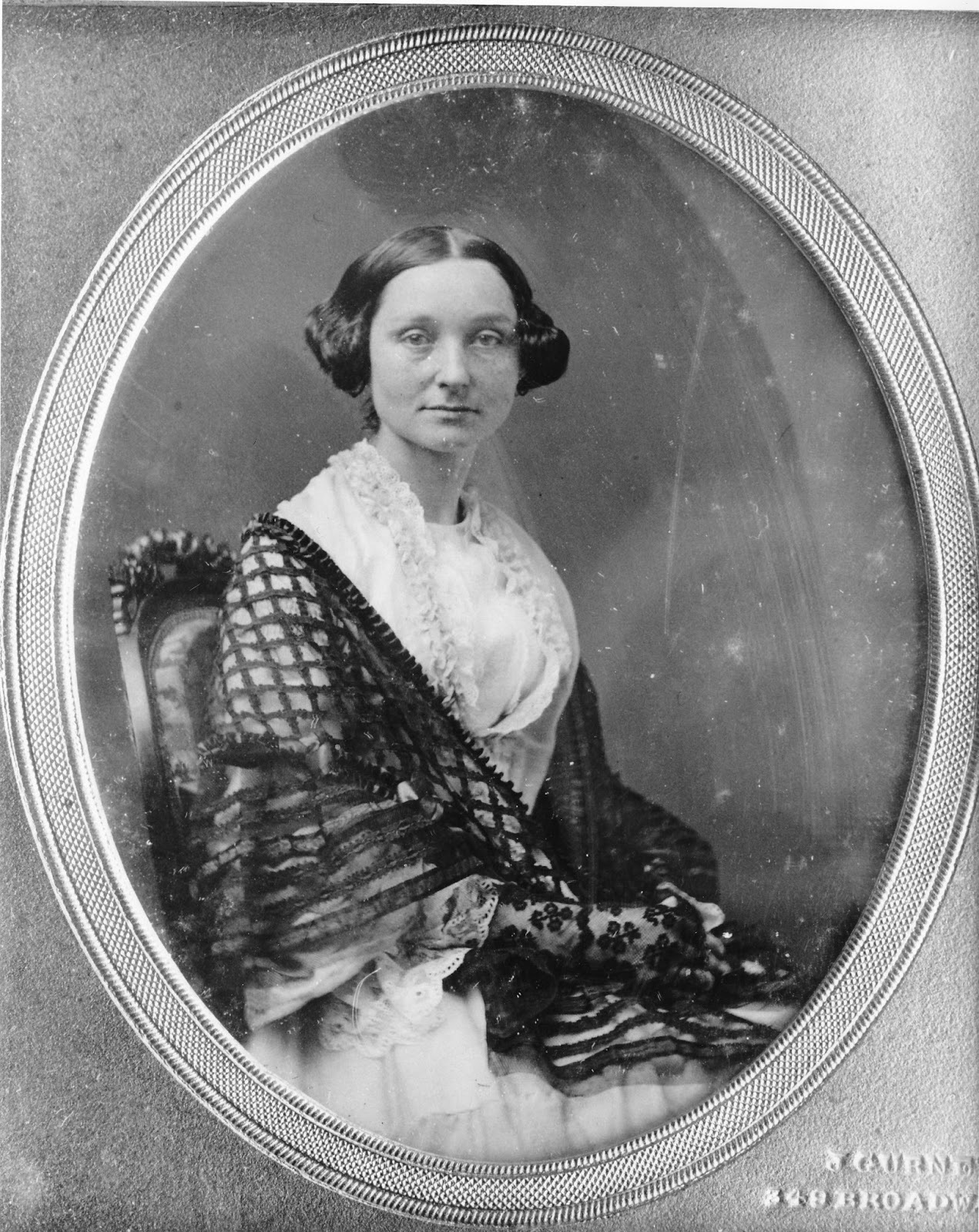
In rare cases, some women would even accompany their husbands on whaling voyages as “sailor sisters”, a term coined by a Stonington-born woman named Mary I. Burch Brewster (1822-1878). It was believed by some ship owners that a female presence aboard whaling ships would raise the spirits of seamen; however, this privilege was usually only extended to the wealthiest or most successful ship captains and their wives. Feminist historians also speculate that some New England women opted to join their husbands on whaling voyages to inhibit the presence of concubines aboard the ship. American whalemen were known to kidnap Pacific Islander women and keep them aboard as sexual servants. In one account by Briton Cooper Busch, a whaling captain from Stonington named William Wilson recorded this statement following a stop on the island of Pohnpei: “Girls come on board – have to if brother tells them to – if they cry they are beat – a man can get any girl he wishes” (Busch 139). Beneath the already buried history of women’s involvement in the American whaling industry lies the sexual exploitation and abuse of unnamed Indigenous women.
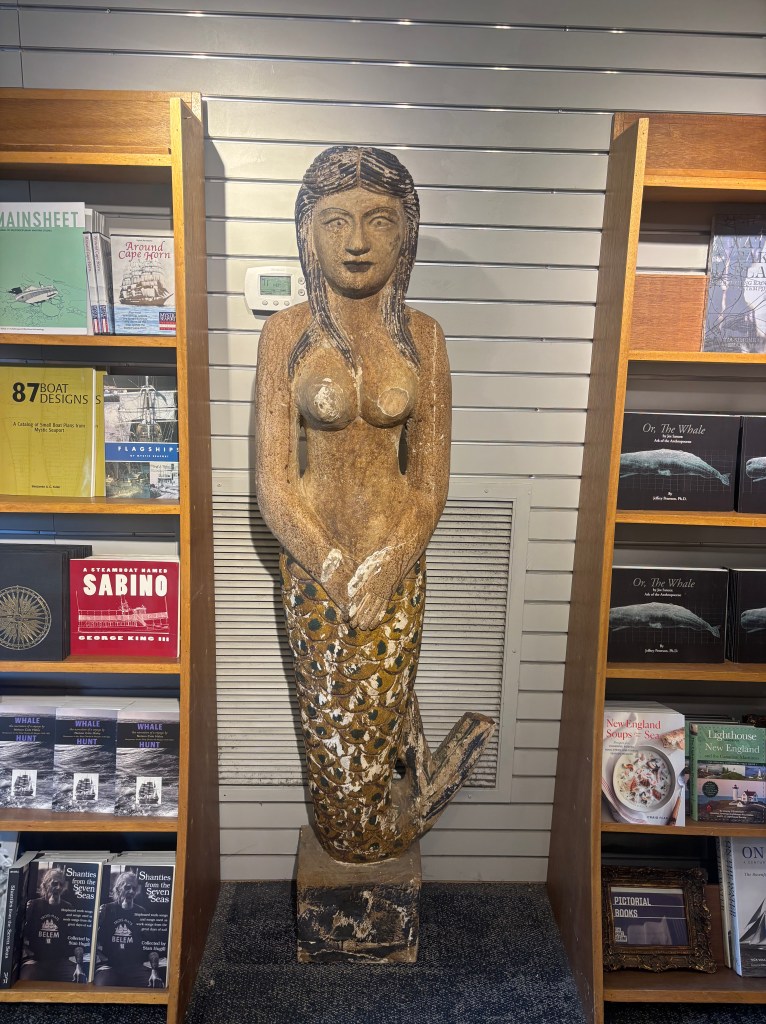
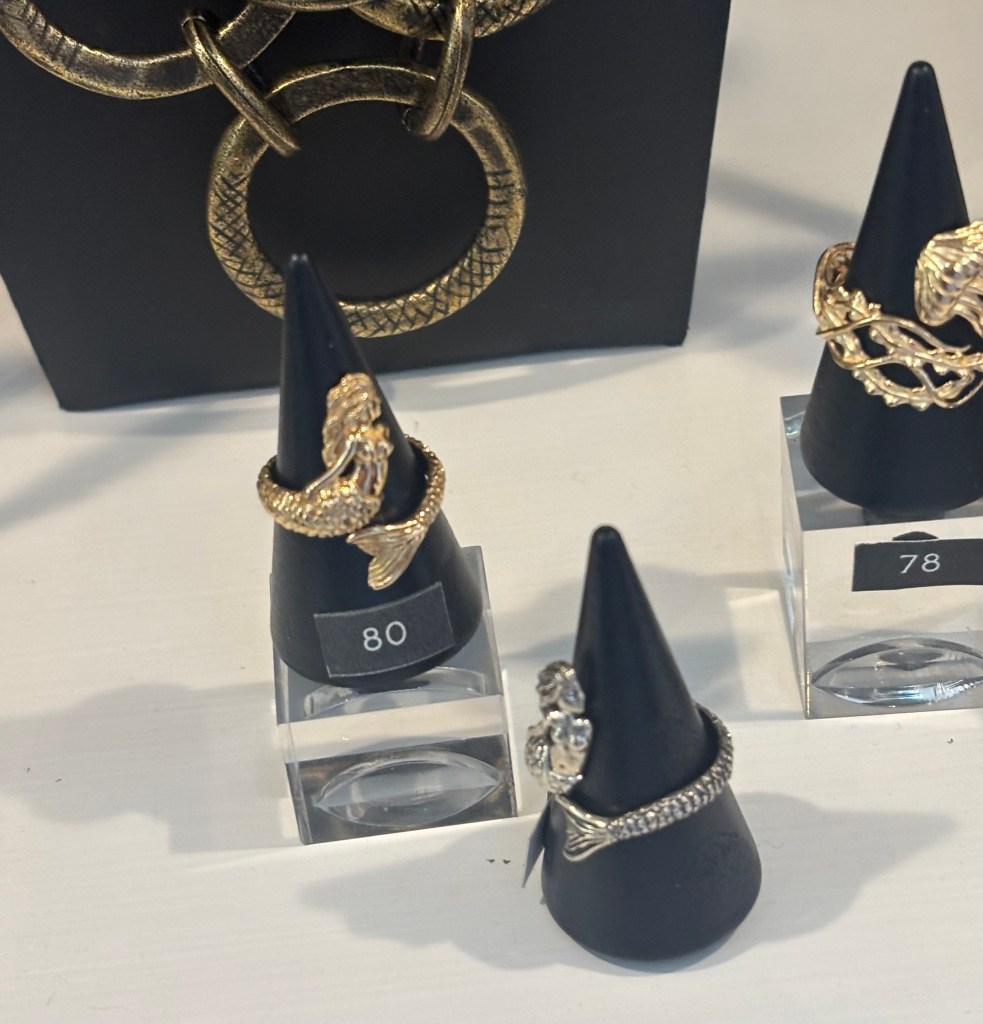
Reading about the extensive labor that New England women performed to sustain themselves, their families, and their townships, I’m once again struck by the absence of any acknowledgement of this labor in local homages to whaling history across Mystic and Stonington. Any mention of women, or nod to the ‘feminine’ is included only to accessorize the strength and prowess of whalemen, many of whom remained emotionally and physically dependent on women’ s labor on and offshore. It does not seem accidental to me that so many of the whale souvenirs dispersed throughout Mystic and Stonington gift shops sit in close proximity to mermaid, siren, or other feminized tokens. In the nineteenth-century and in the present day, female bodies, labors, and accomplishments are marginalized to the extent that they occupy a similar ontological status to the non-human.
Many ecofeminist activists and scholars proceed with the conviction that gender inequality and environmental degradation in patriarchal, extractivist societies are interdependent phenomena – simply put, we can not hope to disassemble one system of oppression without the other. If more care and accountability was taken towards the representation of women in New England whaling history, would that accountability then be feasibly taken for whales as well? Acknowledging the embodied experiences and agencies beyond that which has been accessorized in the name of hypermasculine patriotism seems to be another necessary step if we want to harness history to enact a more equitable, eco-conscious future for all.

