This blog is spurred by the need for a space to reflect on my personal and locational proximity to the American whaling industry and its cetaceous hauntings. In 2021, my mother relocated from my hometown in Upstate New York to a small town on the coast of Southern Connecticut. Nested between a bustling seaport and the Connecticut/Rhode Island border, the townships of Mystic and Stonington, like many other shoreside communities on the North Atlantic coast, carry visual and infrastructural remnants of the whaling industry. Many of the buildings, inns, and homes (including the house my mother moved with the explicit purpose of restoring, which dates back to 1682) populating the towns are either survived from the 19th-century, when American whaling was at its most profitable, or are designed to to supply nostalgic maritime signifiers and aesthetics to eager business owners and curious tourists. Proximity to an aesthetically-pleasing past motivates hordes of tourists to Stonington and Mystic in equal measure with proximity to the ocean itself. The decline of whaling as a commercial enterprise in coastal New England is shown to be an asset, rather than a detractor, for drawing tourism to the region. Jamie L. Jones refers to this development as “quaintness tourism”, by which the whaling infrastructures in New England port communities like Stonington and Mystic no longer serve the industry itself, but as transformed into “objects that invest a visit to the seaside with pleasant melancholy, quirky charm, and visible history” (Jones 64).
Stonington Borough
“Broadening our vision beyond the ship to the shoreside community from which crews were drawn and ships were launched makes possible a more complete and more accurate history…of seafarers and maritime enterprise” (Lisa Norling, 2).
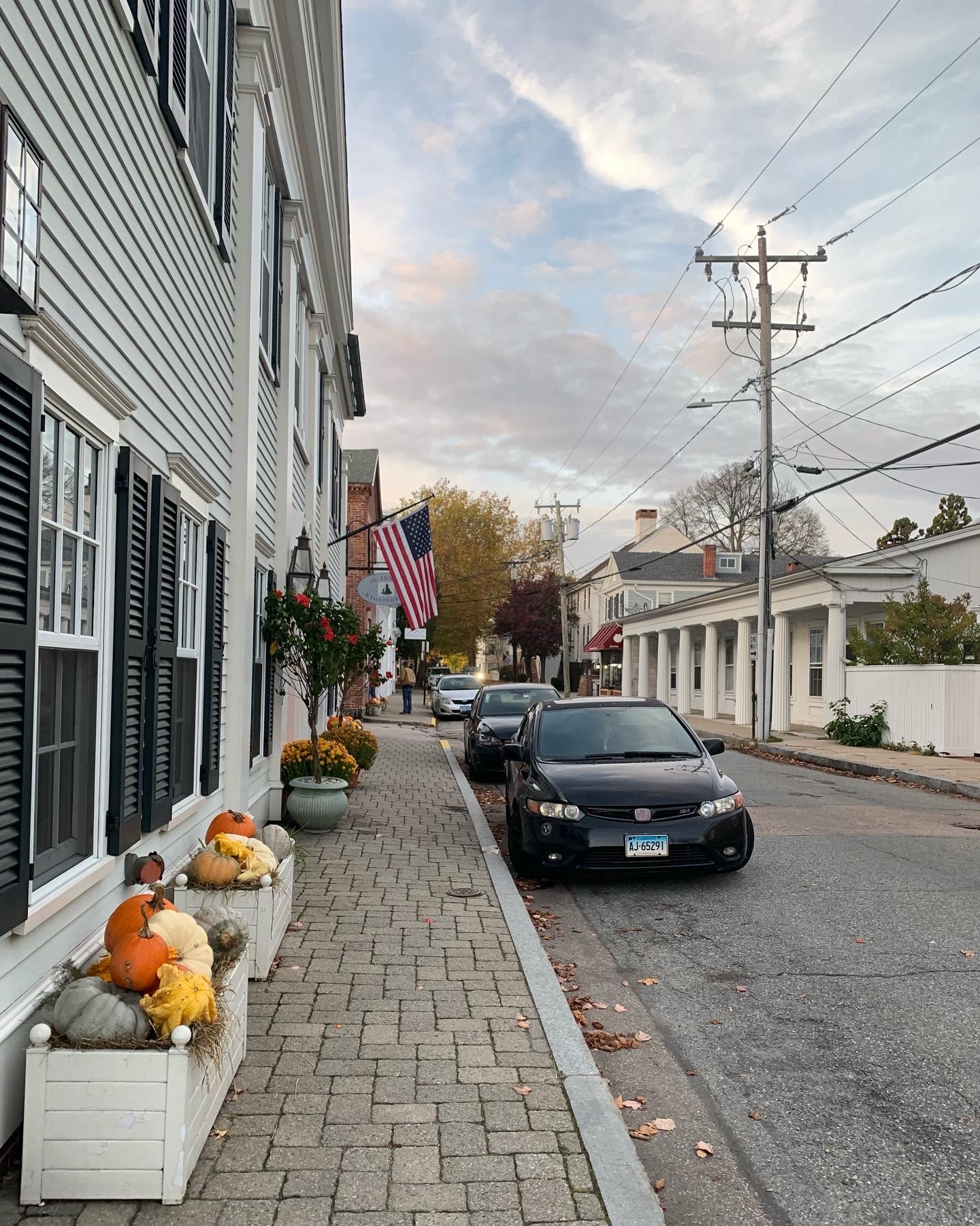
View from Water Street in Stonington Borough. Stonington, CT.
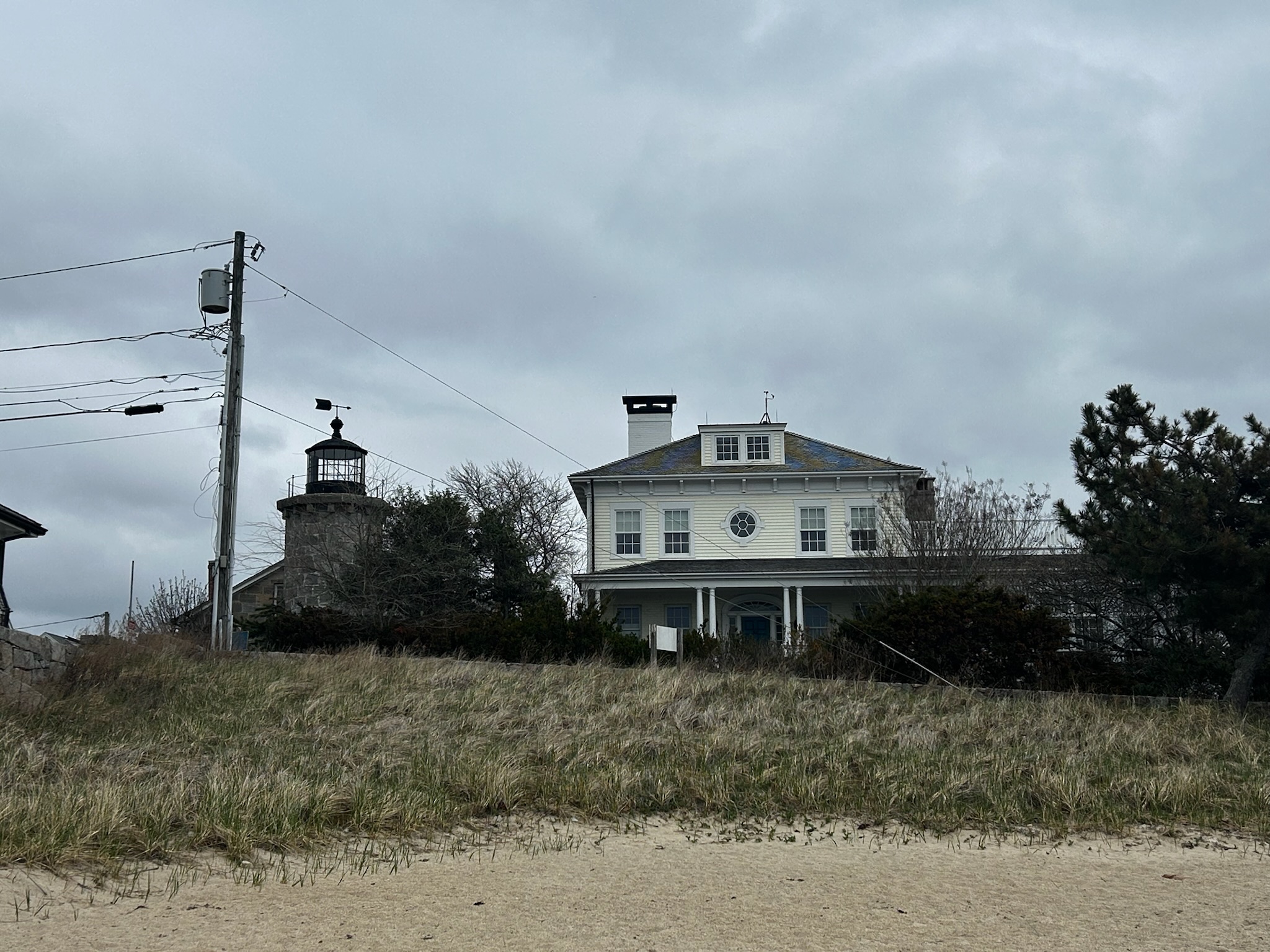
View of the Stonington Lighthouse Museum and a 19th-century residence from DuBois beach. Stonington, CT.
The center of Stonington is lovingly referred to by locals as “the Borough”. The Borough contains a town square and a narrow strip of land surrounded on both sides by water and ending on a “point” in Narragansett Bay. Locals and tourists alike visit the Borough to walk from the town square down to the “point” and admire the local antique shops, restaurants, and colonial-era homes laid out along the way.
“Whales flourished in the waters off of New England. The glacial legacy of rocky outcrops, bays, islands, and undersea fishing banks, all jutting dramatically eastward toward the warm currents of the Gulf Stream, made New England waters a favored feeding ground for many whale species. The bounty of whales led eventually to a global whaling industry dominated by New Englanders” (Shoemaker 4).
In 2012, a dead Humpback Whale washed ashore at Lord’s Point beach at the tip of the Stonington Borough. Representatives from the nearby Mystic Aquarium performed an autopsy on the whale, and determined that it had been struck and killed by a boat in the surrounding waters of Narragansett Bay.
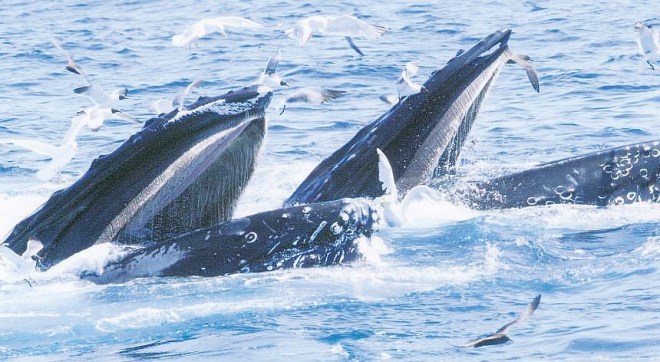
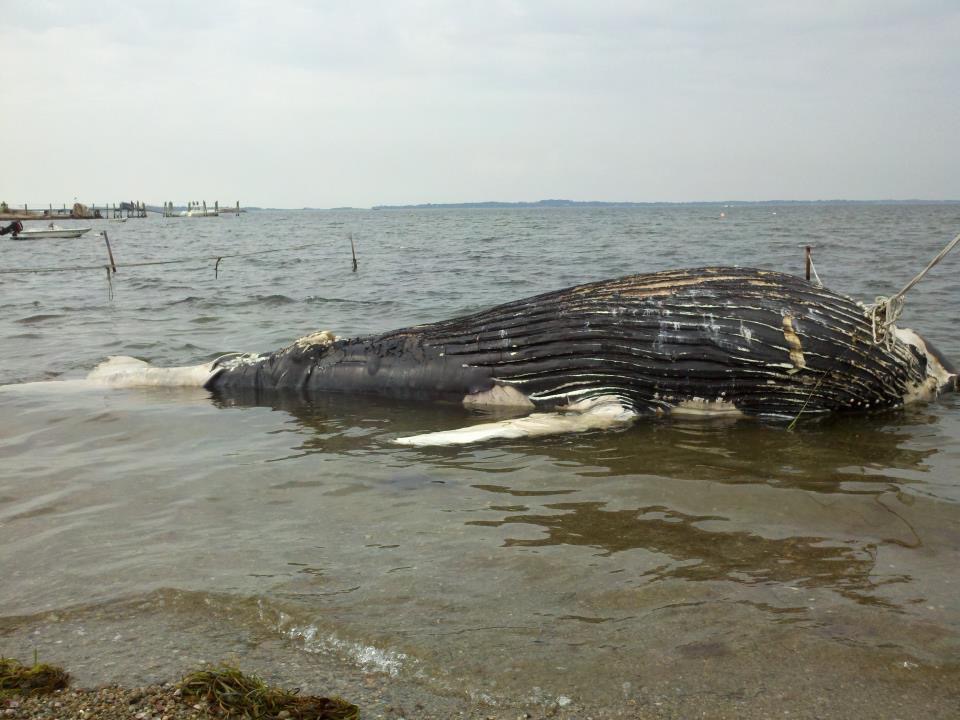
Essential to the cultivation of this quaintness and nostalgia, naturally, is the invocation of whales themselves as the key signifier of a transition from industry to entertainment. And indeed, souvenir shops, museums, restaurants, and guided tours across both Mystic and Stonington are rife with representations of whales in the form of signages, sculptures, stuffed animals, butter dishes, key chains, and numerous other souvenirs. Such ubiquitous cetacean imagery is unsurprising, given the area’s whaling history and the actual presence of whales in New England waters. However, the inviting, appreciative images of whales supplementing the maritime aesthetics of Stonington and Mystic sit at odds with the living experience of whale populations that were hunted to the brink of extinction at the height of the industry itself. Recent reading and discussion on whales – and varied human perceptions of them – have rendered the whale likenesses of my new hometown even more melancholy and forlorn. Jones lists “death, ghosts, and hauntings” as “ruling metaphors for the passage of the whaling industry” in seaside tourist towns across southern New England (Jones 76). With a deeper awareness of the violence and destruction wrought by the Yankee whaling industry, even as I spatially benefit from its remnants, I find these hauntings to signal more than the passage of commercial whaling itself. Mystic and Stonington are populated with ghosts, but not the ghosts of an industry past its profitable peak – my new hometown is instead overrun by the ghosts of whales.
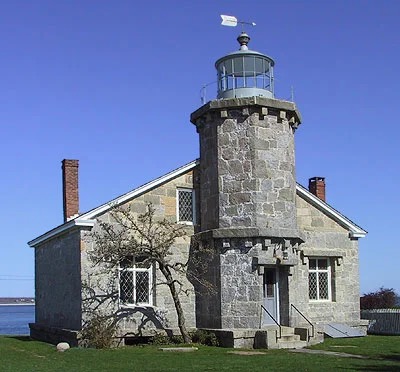
View of The Old Lighthouse Museum at the tip of Stonington Borough. The lighthouse was built in 1840 and was used to guide fishermen, whalemen, and other seafarers across Fishers Island Sound. It remained in used until 1889, after which it was acquired by the Stonington Historical Society. Today the lighthouse has been transformed into a museum of seafaring past for visitors to the area.
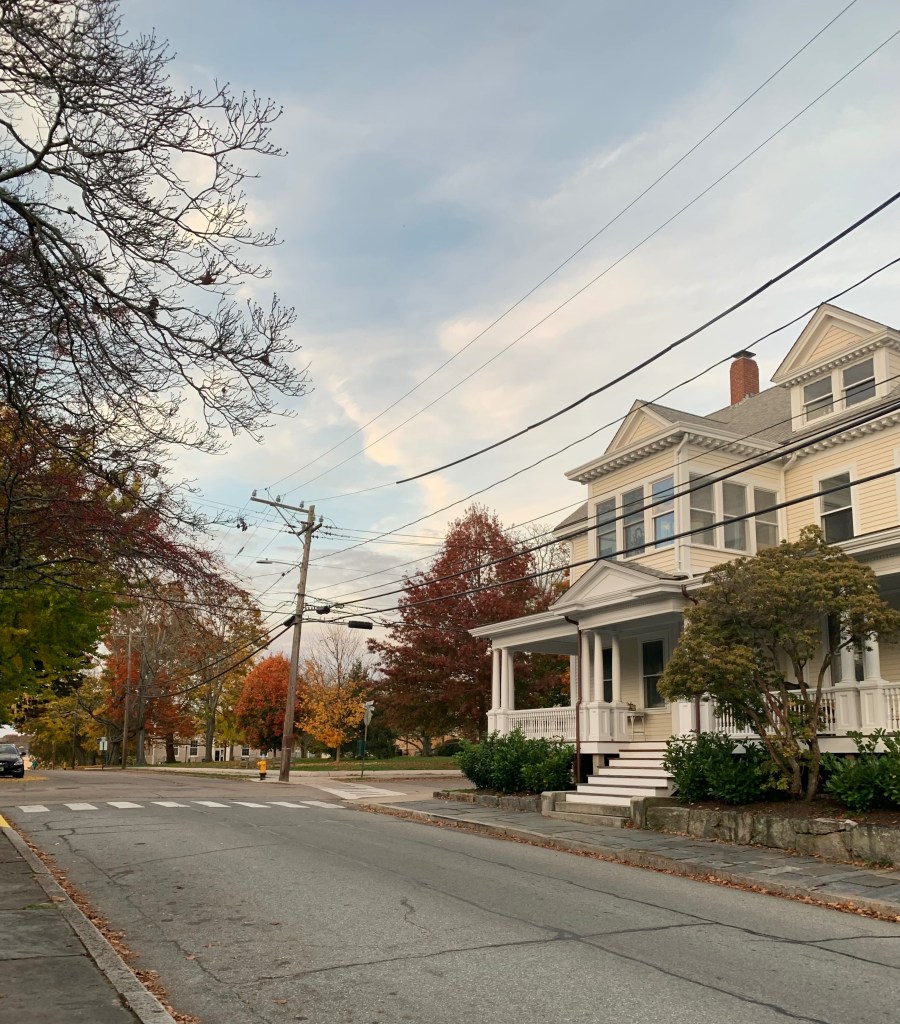
Autumn view into Stonington’s town square from the entrance into the Borough. The home on the right is just one of many refurbished 19th-century homes that now operates as a bed-and-breakfast, simulating a seaside view into the past for tourists.
Through the posts in this blog, I confront and attend to some of these ghosts dispersed throughout notable sites in Stonington and Mystic. Combining written reflections, secondary materials and personal photographs, I reconsider and reframe the representations of whales and American whaling to include proper consideration of those human and non-human communities whose bodily labors and sacrifices tend to be erased from dominant narratives of New England history. This focus extends to a more comprehensive understanding of man-made threats to whale populations past and present, yet also encourages further critique of the heteropatriarchal and (often) white supremacist overtones of Yankee whaling nostalgia that are just as ubiquitous to the maritime aesthetics of Stonington and Mystic. Who is abandoned or erased in these townships and their representation of history? How might we alter the version of history promoted in local tourist attractions to foster accountability for the violence of these local histories for future tourists? How can we transform that accountability into equitable action that benefits the whales and peoples populating this region? Whether through in-depth critique of the ‘quaintness tourism’ aesthetics of Mystic or Stonington, survey of the sanitized, whale-themed souvenirs and artworks dispersed throughout local shops and museums, a reframing of the ‘American whalemen’ history to include the labors of New England women performed on land and sea, or an examination of Mystic’s most whale-centric attractions, I hope to answer these questions throughout the posts in this blog, and to inspire a more equitable mode of tourism that incites deeper respect for cetaceans and their incommensurable contributions to these coastal communities that I continue to call home.
 Whale-Worlds of Coastal Connecticut: An Aspiring Blog and Tour Guide